

Table of Contents
In the Bundesliga, attacking ambition often comes with defensive trade-offs. Some teams consistently dominate possession and territory yet remain unusually vulnerable when possession breaks down. This pattern is not accidental. Repeated exposure to counterattacks reflects specific tactical decisions, spacing priorities, and risk tolerance embedded into team structures long before kickoff.
High Defensive Lines as a Structural Risk
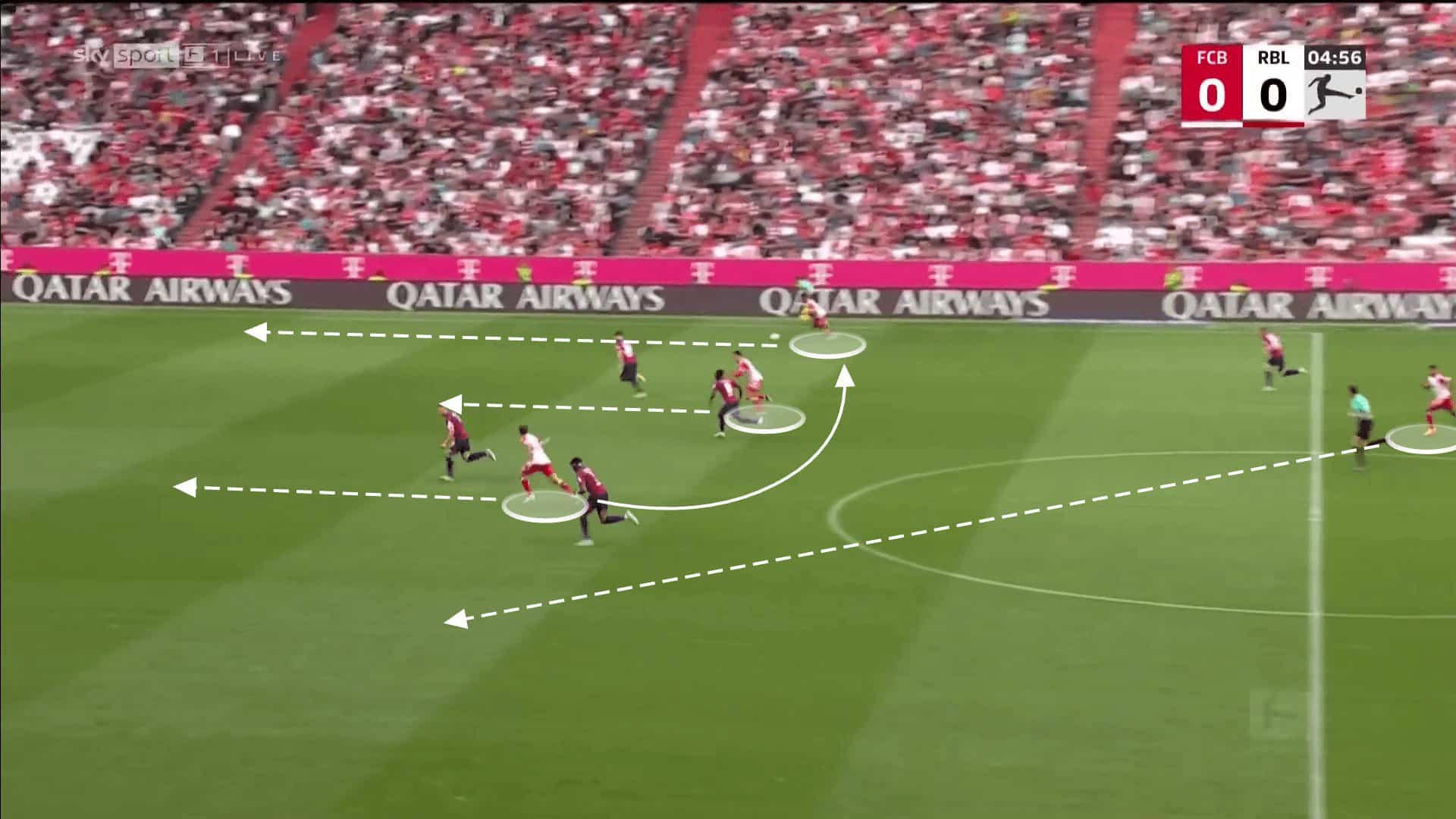
A recurring cause of counterattacking vulnerability lies in how high defensive lines are positioned during sustained attacks. Teams that compress play aggressively near the opponent’s box shorten the pitch intentionally, but this also removes recovery depth. When possession is lost centrally, the first defensive action often occurs while defenders are already running toward their own goal, magnifying the danger of even moderately paced transitions.
Fullback Positioning and Transitional Gaps
Modern Bundesliga systems frequently push fullbacks into advanced or inverted roles. This enhances attacking width and central overloads, yet it also leaves lateral corridors unprotected during turnovers. Opponents that recognize these gaps do not need prolonged build-up; a single forward pass into space can destabilize the entire defensive shape before midfield recovery is possible.
How asymmetrical build-up creates one-sided exposure
When one fullback advances higher than the other, the rest defense becomes asymmetrical. If possession is lost on the overloaded side, defensive balance disappears instantly. The nearest center-back is forced wide, the remaining defenders compress centrally, and passing lanes open diagonally. Counterattacks born from these moments tend to generate high-quality chances rather than speculative shots.
Bundesliga Teams With Recurrent Counterattack Exposure
Certain clubs exhibit repeated counterattack concessions due to stylistic consistency. Borussia Dortmund often commit large numbers forward, leaving space behind an aggressive defensive line. Bayer Leverkusen emphasize positional attacks with advanced wing-backs, increasing exposure when central circulation breaks down. RB Leipzig, despite strong pressing, can be caught when initial pressure is bypassed, as recovery distances become unusually long.
These vulnerabilities persist not because of poor coaching, but because the attacking benefits are judged to outweigh the defensive cost over a full season.
Match Conditions That Intensify Counterattack Threats
Counterattack frequency rises sharply under certain conditions. Matches against compact opponents who willingly concede possession amplify risk, as turnovers occur in predictable zones. Fixture congestion also plays a role, reducing sprint recovery and decision speed. Away matches further increase exposure, as crowd-driven momentum shifts often follow failed attacking sequences.
Interpreting Counterattack Risk in Pre-Match Analysis
From a pre-match analytical perspective, counterattack vulnerability should be treated as a conditional variable rather than a static weakness. When reviewing match setups, analysts often observe how pricing and market expectations shift around possession-dominant teams facing low-block opponents. In situations where structural risk is evident, some observers reference ufabet168 while navigating a football betting website or broader betting environment, not to chase outcomes, but to compare how different pre-match assumptions reflect the likelihood of transitional goals rather than territorial control.
Where the Counterattack Narrative Breaks Down
Not all high-possession teams are equally exposed. Some sides maintain a disciplined rest-defense with midfielders positioned specifically to delay transitions. Weather, pitch conditions, and officiating tolerance for tactical fouls can also suppress counterattacks. When these mitigating factors are present, historical vulnerability loses predictive power and must be discounted.
Translating Tactical Risk Into Analytical Discipline
Effective analysis separates visible incidents from structural probability. A team conceding multiple counterattacks in recent matches may not be inherently fragile if those events stem from unusual game states. Conversely, a side conceding few goals can still carry hidden exposure if recovery patterns remain unchanged. Evaluating spacing, rest-defense shape, and opponent intent provides a more reliable framework than raw outcomes alone.
Summary
Bundesliga teams that are frequently caught on the counter are not failing defensively by accident. Their exposure is the direct result of aggressive positioning, fullback advancement, and calculated risk in possession-heavy systems. Understanding when these conditions apply, and when they are neutralized, allows counterattack vulnerability to be assessed as a situational pattern rather than a fixed flaw.